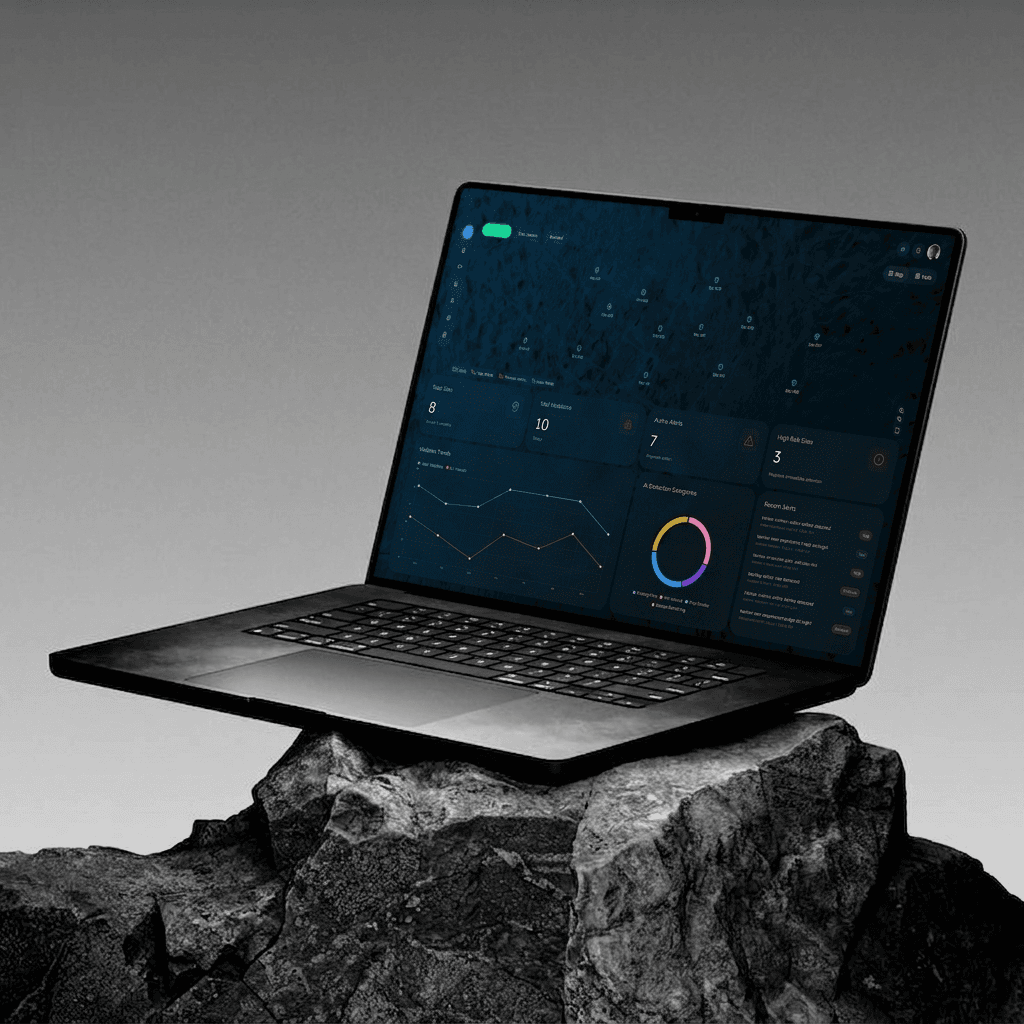
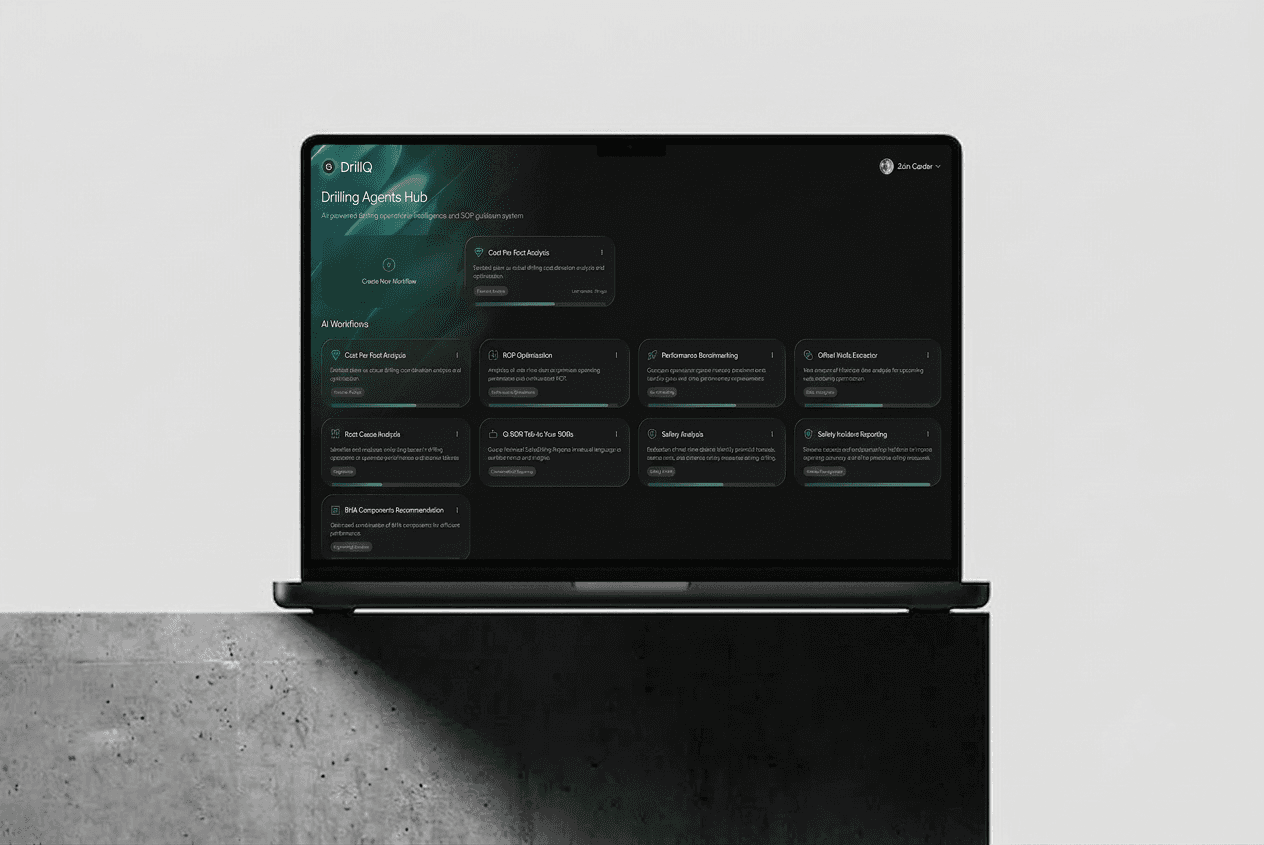
DrillQ
Designing a multi-agent AI system for high-stakes drilling decisions .
" DrillQ , an intelligent drilling operations platform that turns complex rig data into clear, real-time decisions for engineers in the field. "
Client
Role
Industry
Date
The problem
The project started with a simple request : design an AI tool to support drilling engineers.
But early conversations revealed that the issue wasn’t about adding intelligence ,it was about fixing how information was used.
A typical question like:
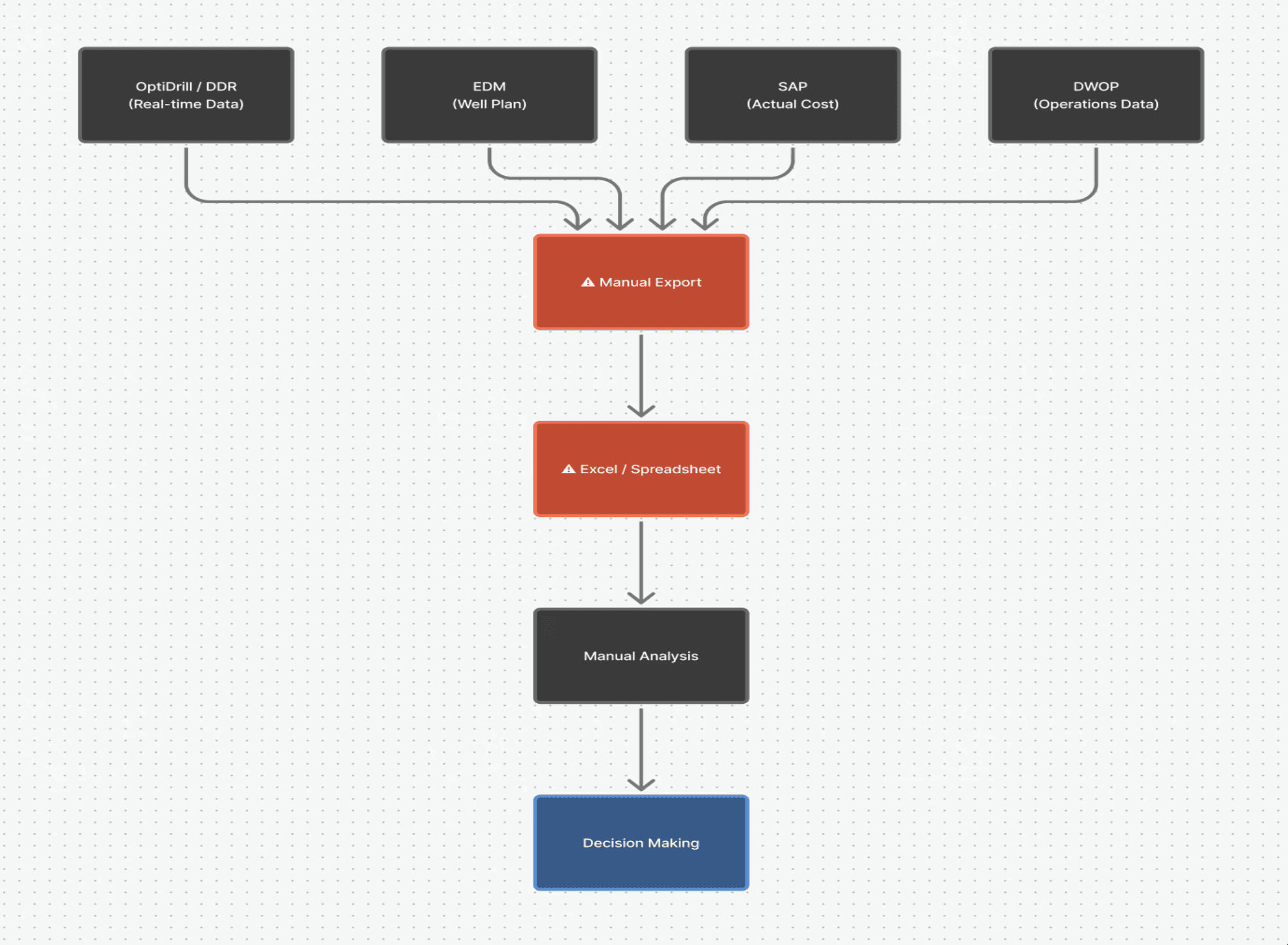
“Why is this well over budget?” , could not be answered in one place.
To get there, engineers had to move across multiple systems , planning tools, cost platforms, and operational reports , each holding part of the picture. The process was manual and fragmented : data had to be extracted, reformatted, and stitched together before any real analysis could begin.
The Solution
Instead of designing a single AI interface, I approached the problem as a system design challenge.
The core question was :
How do you design an AI that engineers can trust, navigate, and extend , without overwhelming them ?
Early explorations followed a familiar pattern : a single chat interface that could answer any question. It was simple, fast to prototype, and aligned with how most AI tools are built today. But in testing, it consistently broke down. Engineers didn’t know what to ask, what the system was capable of, or how to verify the answers they received.
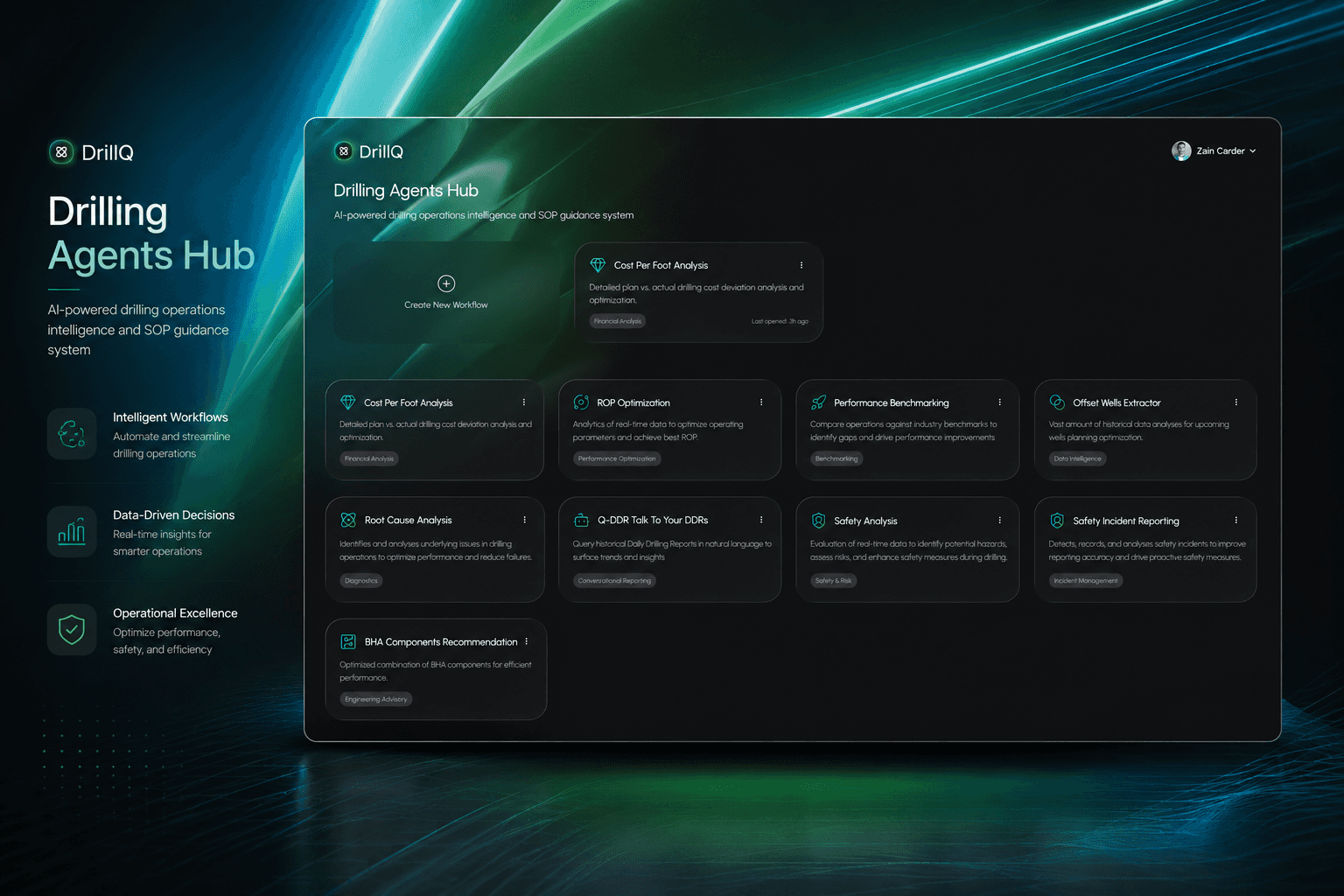
1. Agents Hub : Structuring complexity
Instead of a single AI entry point, the system is organized as a library of domain specific agents. Each agent represents a focused workflow , allowing engineers to start with clarity rather than ambiguity.

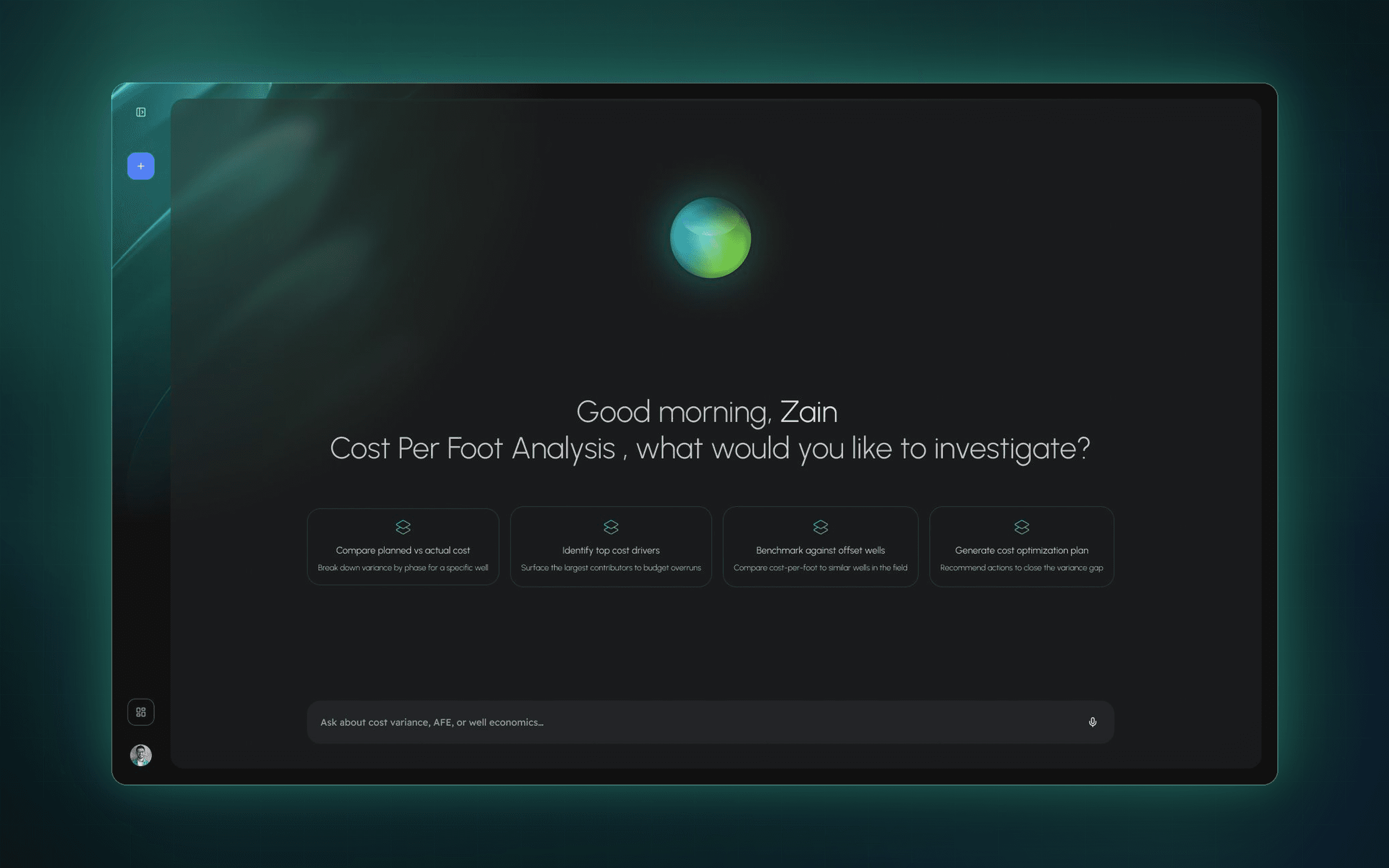
2. Execution Interface : Framing the interaction
Once inside an agent, the experience shifts from open-ended chat to guided execution. Predefined tasks and structured outputs help users move quickly from question to analysis.
3. Workflow Execution : Making the AI visible
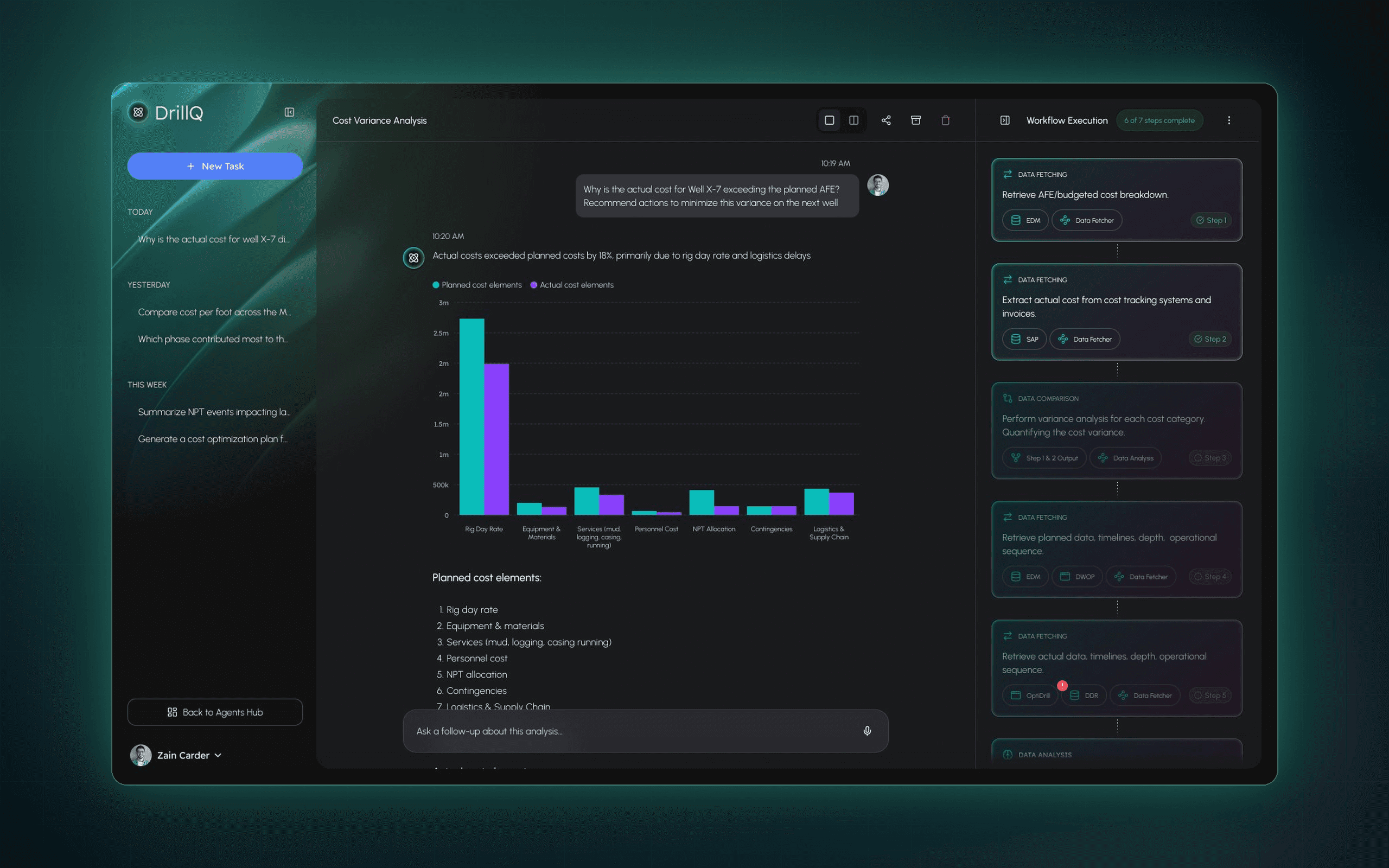
To build trust, the system exposes how results are generated. Every analysis is broken into clear steps—showing what data was used, how it was processed, and where issues may have occurred.
Challenges
Balancing visibility vs simplicity . Too little transparency reduced trust. Too much detail overwhelmed users.
The solution was a layered system :
High-level signals always visible
Detailed steps expandable
Full depth available when needed
Bridging two domains (AI × Drilling)
AI terminology and drilling terminology don’t overlap.
I treated naming as a design problem , ensuring every label aligned with how engineers think and speak.
Key Takeaways
Reframe the problem with users
The real problem (trust and traceability) only emerged through direct conversations.
Specialized beats general
Domain-specific agents performed better than a single AI interface.Transparency builds adoption
Showing how results are generated is critical in high-stakes environments.Design systems, not just screens
The ability for users to create their own workflows made the product scalable beyond its initial scope.Naming is part of the UX
Clear, domain-relevant language significantly improved usability and trust.
Projects